
Marvel Studios’ Ironheart might carry the weight of legacy on its back, but it doesn’t follow the expected playbook.
Created by Chinaka Hodge and produced with the creative guidance of Ryan Coogler (Black Panther: Wakanda Forever, Sinners), Ironheart introduces Riri Williams as a teenage genius who’s not here to follow Tony Stark’s path by glorifying his legacy—she’s here to challenge the structures that made him.
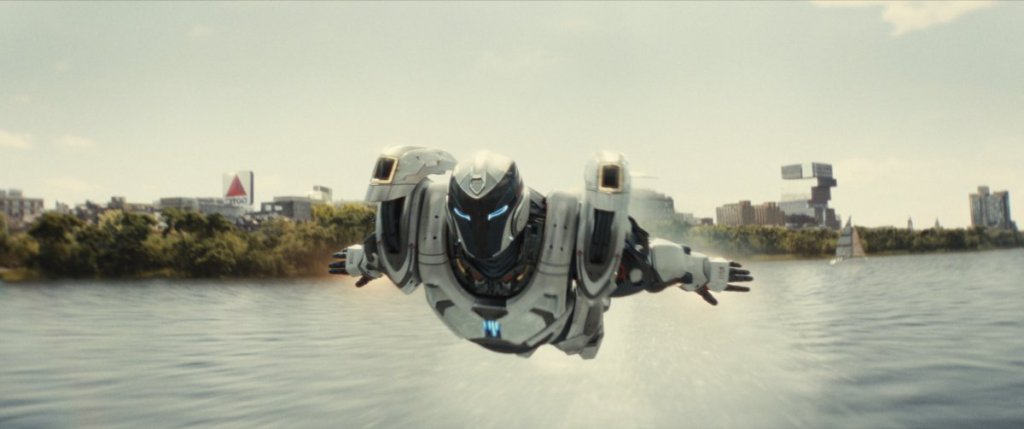
Dominique Thorne’s Riri was first introduced in Black Panther: Wakanda Forever, where we already got a glimpse of her genius and how much she could influence this universe. In her solo show, we now delve into who Riri is and what makes her tick. And we quickly realise that she’s not trying to be Iron Man 2.0.
If Tony Stark was not a billionaire, he’d never become Ironman
“What is important is that [Riri] is not trying to be someone else. She’s asking, ‘Where do I fit into this world?’ And that’s what gives her power.” Dominique Thorne’s comment in an interview with Collider about her version of Ironheart sums up pretty well what we’re seeing on screen. Most characters start by following their predecessors, but not Riri. She’s not trying to walk in Tony’s footsteps.
Riri’s reason for creating her suit opposes Tony’s in a way that gives the character depth and creates her own origin story. Tony built his first armour to escape captivity, which was a consequence of his company profiting from war and people’s deaths. That hard truth made Tony question morality. Riri built her suit because of pain. She saw her best friend and stepdad die in front of her (the result of violence) when she could do nothing. Her trauma made her react—she built a shield for herself and the ones she loves.
What’s so poetic and beautiful about this is that Ironheart doesn’t follow the classic legacy story. It doesn’t come from admiration, but from resourcefulness and need. She’s not trying to be Iron Man, and that’s amazing. “I built [the suit] because I could” is a clear way of Riri telling the audience that Tony is only a resource, not an idol.
I accidentally resurrected my best friend
Most superheroes are born out of a big, cinematic tragedy. Riri’s story is quieter. Her pain of losing her loved ones in such a mundane way (I know, morbid, but true) is what makes her grovel into grief and reach for her genius to build “something iconic.” Her suit, then, is not about power—it’s about protection.
Then we see Riri involuntarily creating N.A.T.H.L.I.E. In an attempt to recreate GRIOT (Wakandan AI), her own algorithm pulls from her memories and grief to “bring back to life” Riri’s best friend. And the writers’ choice in doing so is so smart because it plays a crucial role in understanding who Riri is. Tony created B.A.R.F. intentionally back in Civil War to deal with his regrets. But Riri didn’t want to create N.A.T.A.L.I.E. However, this accident is a tool for us to see Riri’s grief personified. “You can’t just build your way out of loss,” N.A.T.A.L.I.E says to Riri in episode 5. Throughout the whole series, we see her struggling with it, while the AI reaches almost human capabilities.
Chinaka Hodge said in an interview with Shadow and Act, “We weren’t interested in stereotypes or symbols. We wanted Riri’s world to feel like the one our viewers recognise—complex, unfair, but never without hope.” This storyline especially reflects that intent—it’s painful, complicated, and deeply human.
Genius doens’t equal god
Riri’s intelligence is obvious. But Ironheart doesn’t frame her as a prodigy everyone wants to protect. It shows how pain and ego can corrupt even the most gifted minds. Her decision-making is often impulsive. She makes mistakes. She hurts people. Her intellect gives her power, but not wisdom.
That’s what makes Riri compelling. She’s not a flawless new face of the MCU—she’s a teenager carrying a lot of grief, anger, and a burning need to stay in control. The writing doesn’t sanitise that. Instead, it leans into making us watch someone brilliant self-sabotage. As Thorne put it, “She’s figuring it out in real time. And that means sometimes she makes the wrong call. But that’s what makes her feel real.”
A hero so human it makes some big boys cry (for some reason)
From the first episode to the very end, we see Riri fumble again and again with her own choices. The stakes for her are high—but so are the consequences. Ironheart doesn’t end with a happy resolution, but a bittersweet reaction to Riri’s decisions that makes your stomach turn—and yet, it’s also so entertaining when you think about where this is going.
The complexity of Riri hurts because we’re looking humanity straight in the mirror. And who wants that? Ironheart makes us think about our own choices and how our emotions can drift us away from good sometimes. But it also shows that no one can be all good and all righteous. We’re all deeply flawed and deeply human. That’s the beauty of this show. But, for some reason, that puts some ants in a lot of people’s pants.
 POPFICTION
Leave a comment